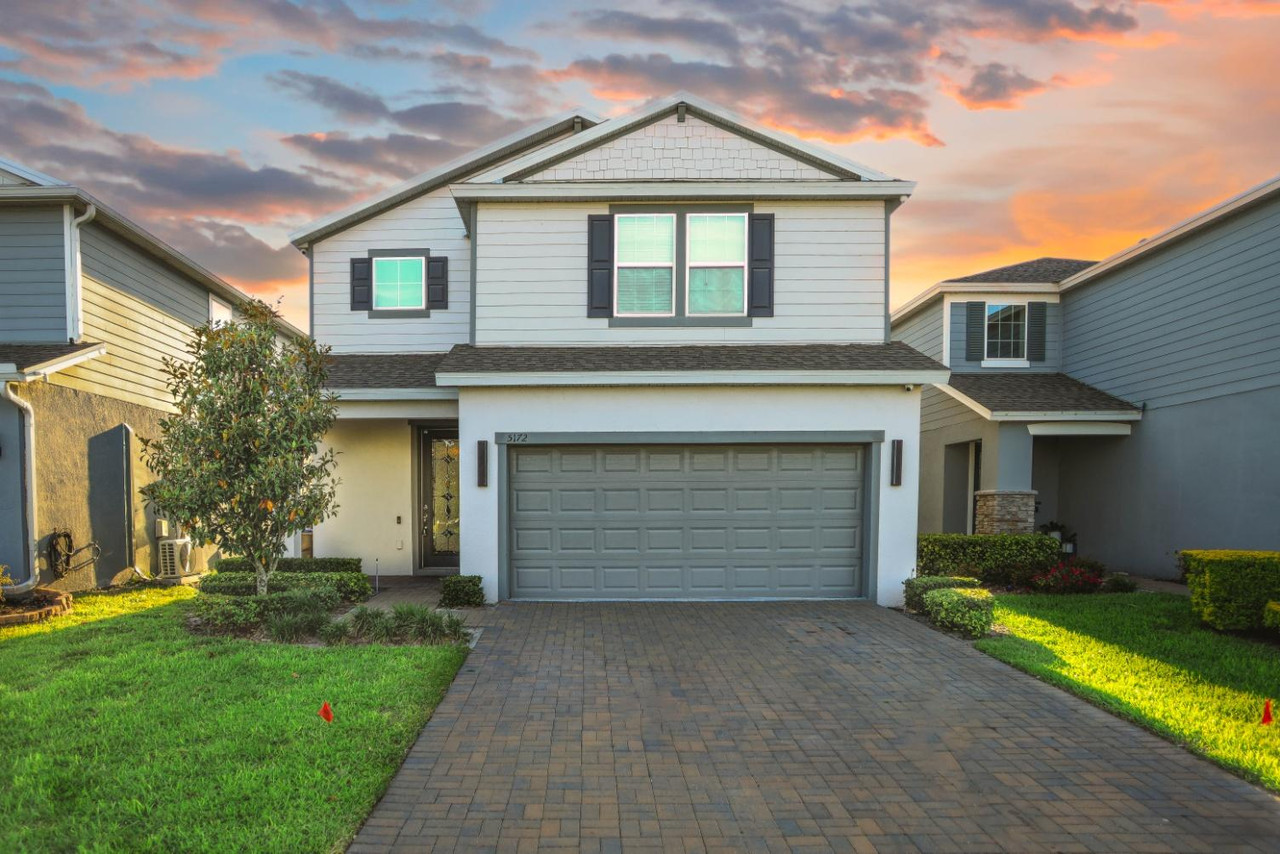
FHA financing is often called “the 3.5%-down loan.” Although FHA home loans let buyers purchase a home with less money down, not every buyer qualifies, and some must put more money down when they buy a house.
The Federal Housing Administration does not make mortgages directly. Instead, it insures loans from FHA-approved private lenders. This structure explains much of the program’s flexibility: lenders may approve borrowers with lower credit scores, higher debt ratios, limited cash for a down payment, or recent credit events that make conventional financing difficult.
It also explains why meeting FHA’s minimum standards does not guarantee approval. Lenders can impose stricter standards, called overlays. They may require a higher credit score, lower debt-to-income (DTI) ratio, more reserves, or extra documentation beyond FHA’s baseline rules.
The result is a borrower can meet FHA guidelines yet be declined by a lender.
Credit Score and Down Payment Requirements
FHA’s basic credit-score and down-payment tiers are straightforward.
|
Credit score |
Minimum down payment |
Maximum base loan-to-value |
|
580 or higher |
3.5% |
96.5% |
|
500–579 |
10% |
90% |
|
Below 500 |
Not eligible under standard FHA rules |
Not applicable |
The key detail is that FHA’s minimum differs from a lender’s minimum.
Many lenders set their floor above 580. Credit-score overlays in the low to mid-600s are common, especially when less money is available for a down payment, there’s recent derogatory credit, debt ratios are high, or manual underwriting is required. Some lenders originate FHA loans below 580, but borrowers in that range should expect more scrutiny, compensating-factor requirements, and fewer lending options.
For multiple applicants, lenders usually use each person’s middle score from their tri-merge credit report, then qualify the file using the lower middle score. Ask your lender about their underwriting approach.
A low score does not automatically disqualify you for FHA. But it can affect lender approval, documentation requirements, and FHA’s competitiveness against other loan options. Income ratio, or DTI, is where many FHA explanations become misleading.
The familiar 31% housing ratio and 43% total-debt ratio are FHA figures. But they mainly apply to manual underwriting, not most FHA loans approved through the automated underwriting system.
Lenders generally submit FHA loans through the TOTAL Mortgage Scorecard, an automated underwriting system. The system issues either an Accept recommendation or a Refer recommendation.
- An Accept recommendation means the file may proceed under FHA’s automated underwriting rules, subject to lender review, verification, and all other eligibility requirements.
- A Refer recommendation means the loan must be manually underwritten, assuming the lender is willing to offer manual underwriting.
With an Accept, FHA does not use a single universal DTI ceiling like manual underwriting. The automated system considers the full file, including credit history, loan-to-value ratio, cash reserves, payment shock, income reliability, and other risk factors.
This means some borrowers with total DTI above 50% can get automated approvals if the rest of the file is strong. Conversely, a borrower with a lower DTI can be denied if other factors are weak.
For manually underwritten loans, the guideline limits are more structured:
|
Manual underwriting scenario |
Maximum housing ratio |
Maximum total DTI |
|
Baseline manual underwriting |
31% |
43% |
|
One documented compensating factor |
37% |
47% |
|
Two or more documented compensating factors |
40% |
50% |
Common compensating factors may include:
- Verified cash reserves
- A documented history of paying housing costs similar to, or greater than, the proposed payment
- Residual income remaining after monthly obligations
- Minimal increase in housing expense
- Additional verified income not used to qualify
- Strong employment and stable income
The key word is documented. A borrower cannot just say they have stable income, low expenses, or family support. The lender must verify compensating factors under underwriting rules.
The takeaway is simple: do not assume FHA limits you to a 43% back-end DTI. But also don’t assume a 50%+ DTI will be approved. Approval depends on an automated Accept and lender overlays.
FHA Mortgage Insurance
FHA borrowers generally pay mortgage insurance in two forms:
- Upfront Mortgage Insurance Premium (UFMIP): 1.75% of the base loan amount.
- Annual Mortgage Insurance Premium (MIP): Charged annually but collected in monthly installments.
Lenders usually finance the upfront premium into the loan rather than paying it in cash at closing. This reduces immediate cash needs but increases the total amount borrowed.
For many common FHA purchase loans with terms longer than 15 years, the annual MIP structure under HUD Mortgagee Letter 2023-05 looks like this:
|
Base loan amount |
Loan-to-value ratio |
Annual MIP |
MIP duration |
|
$726,200 or less |
90% or less |
0.50% |
11 years |
|
$726,200 or less |
Above 90% to 95% |
0.50% |
Mortgage term |
|
$726,200 or less |
Above 95% |
0.55% |
Mortgage term |
|
Above $726,200 |
90% or less |
0.70% |
11 years |
|
Above $726,200 |
Above 90% to 95% |
0.70% |
Mortgage term |
|
Above $726,200 |
Above 95% |
0.75% |
Mortgage term |
The duration often matters more than the annual percentage.
A buyer putting 3.5% down starts at 96.5% loan-to-value. That falls in the above-95% category, so FHA mortgage insurance usually remains for the full term. It does not automatically disappear at 20%, 22%, or even 50% equity. For most borrowers, the practical options are refinancing or paying off the mortgage.
By contrast, a borrower who puts down at least 10% starts at 90% loan-to-value or lower. On many FHA loans with terms greater than 15 years, that reduces the MIP duration to 11 years.
That difference can be significant. A larger down payment may reduce the loan amount and eliminate many years of monthly mortgage insurance payments.
FHA MIP vs Conventional PMI
FHA mortgage insurance and conventional private mortgage insurance are not interchangeable.
|
Feature |
FHA mortgage insurance |
Conventional PMI |
|
Upfront charge |
Generally 1.75% of the base loan amount |
Usually none |
|
Monthly cost |
Based on FHA’s published MIP schedule |
Varies by credit, down payment, insurer, and loan structure |
|
Cancellation at 80% equity |
Generally no for FHA loans above 90% original LTV |
Borrower may generally request cancellation at 80% of original value, subject to conditions |
|
Automatic termination |
Generally no for FHA loans above 90% original LTV |
Generally terminates automatically at 78% of original value if statutory conditions are met |
|
Refinance needed to remove long-term coverage |
Often yes |
Often no |
This difference is why borrowers with mid-600s or better credit should compare FHA with conventional low-down-payment options instead of assuming FHA loans are less expensive or the best route.
Loan Limits and Occupancy
FHA loan limits vary by county and are updated annually. For 2026, the national one-unit FHA loan-limit floor is $541,287, while the high-cost-area ceiling is $1,249,125. These limits apply to FHA case numbers assigned on or after January 1, 2026.
The county matters. A home can be within its local market price but exceed the FHA loan limit for that county. FHA does not allow partial approval above the cap; the loan must fit the limit.
For comparison, the 2026 baseline conforming loan limit for a one-unit conventional loan is $832,750. In lower-cost counties, that is materially higher than the FHA floor.
This creates a gap in some markets:
- The home may be too expensive for FHA financing because the local FHA limit is lower.
- The same home may still fall within conventional conforming-loan territory.
- The buyer’s credit profile, down payment, and income may determine whether conventional financing is available.
FHA Home Loans are for Primary Residences
FHA financing is intended for owner-occupied principal residences. It is not generally available for second homes or investment properties.
Borrowers must live in a home as their main residence within 60 days of closing and intend to stay at least one year. This occupancy rule is why buyers should not use FHA financing for properties they plan to rent out immediately.
Borrowers are also generally limited to one FHA-insured mortgage at a time. However, exceptions can apply, including situations such as:
- A documented employment relocation beyond a reasonable commuting distance.
- A household-size increase that makes the current home inadequate, subject to FHA requirements.
- A divorce or legal separation in which the borrower vacates a jointly owned property.
- Certain circumstances involving a non-occupying co-borrower on another FHA loan.
These exceptions require documentation and lender review. Discuss them before making an offer and do not treat them as automatic approvals.
The House Has to Qualify, Too
FHA approval requires more than an eligible borrower. The property must also meet FHA’s Minimum Property Requirements.
An FHA appraiser has a dual role:
- Estimate the property’s market value.
- Identify visible conditions that may affect safety, security, or soundness.
The appraisal is not a substitute for a home inspection. An appraiser does not perform the buyer-focused evaluation that an inspector does, and an FHA appraisal may not identify every defect, repair need, or future maintenance issue.
Common FHA appraisal issues can include:
- Peeling, flaking, or chipping paint on homes built before 1978 because of lead-based paint concerns
- Missing handrails where stairs have three or more risers
- Damaged roofs, active leaks, or roofs with insufficient remaining life
- Exposed wiring or non-functioning electrical components
- Inoperable heating, plumbing, or mechanical systems
- Water-heater safety issues, including missing temperature-and-pressure relief components
- Standing water, drainage problems, or moisture issues in crawl spaces
- Broken windows, damaged exterior doors, or inadequate security
- Structural concerns
- Inadequate water supply or sewage disposal
New construction homes are less likely to have these issues because systems are new, inspections are part of the process, and new homes are built to high standards and must meet new building codes.
Older homes, distressed properties, deferred-maintenance homes, and “as-is” listings are more likely to have FHA repair conditions.
FHA’s minimum standards don’t guarantee a home is free of costly defects; if you’re purchasing a home, make sure it’s inspected.
Credit Events and Special Features
FHA can be more forgiving than conventional financing after certain credit events, but borrowers still need to meet waiting-period, documentation, and re-established-credit requirements.
Typical guidelines include:
|
Credit event |
General FHA waiting period |
|
Chapter 7 bankruptcy |
Usually 2 years from discharge |
|
Chapter 13 bankruptcy |
Often possible after 1 year of satisfactory plan payments, with court approval where required |
|
Foreclosure |
Usually 3 years from title-transfer date |
|
Short sale or deed in lieu |
Often about 3 years, depending on circumstances and credit history |
Lenders may consider shorter waiting periods in limited cases with documented extenuating circumstances, but borrowers should not assume exceptions are available.
Delinquent federal debt can also stop an FHA loan. Lenders check the Credit Alert Verification Reporting System, commonly called CAIVRS. An unresolved delinquency or default involving certain federal obligations—including some defaulted federally backed student loans—may prevent approval until it is resolved or addressed under an acceptable repayment arrangement.
FHA also offers several features that can make the program particularly useful:
- Gift funds: The full down payment may come from an acceptable gift source if the transfer and gift documentation meet FHA rules.
- Non-occupying co-borrowers: A qualifying family member may sometimes join the loan without living in the home, allowing their income to support qualification.
- Assumability: A future qualified buyer may be able to assume an FHA loan, including its remaining balance, interest rate, and term, subject to lender approval. This can be valuable if prevailing mortgage rates are substantially higher when the home is sold.
- 203(k) rehabilitation financing: FHA’s 203(k) program can combine the purchase price and eligible renovation costs into one loan.
These features do not make FHA universally better. They make it more flexible for certain borrower profiles.
When FHA Is Not the Best Fit
FHA is often an excellent option for a buyer with limited savings, a lower credit score, a recent credit event, a higher DTI, or a down payment funded by gifts.
But borrowers with stronger credit should compare FHA with conventional low-down-payment programs such as Conventional 97, HomeReady, and Home Possible.
|
Factor |
FHA |
Conventional 97 / HomeReady / Home Possible |
|
Minimum down payment |
3.5% with a 580+ score |
Often 3% |
|
Credit flexibility |
Generally more flexible |
Typically less flexible and more score-sensitive |
|
Mortgage insurance duration |
11 years at 90% LTV or lower; otherwise generally loan term |
Usually cancellable at 80% of original value and automatically terminates at 78%, subject to applicable conditions |
|
Upfront mortgage-insurance charge |
1.75%, usually financed |
Generally none |
|
Income limits |
No standard FHA income cap |
HomeReady and Home Possible commonly have area-median-income eligibility rules |
|
Property-condition standard |
FHA Minimum Property Requirements apply |
Standard conventional appraisal requirements |
|
Assumable |
Yes, with lender and buyer qualification |
Generally no |
A borrower with a mid-600s credit score or higher may find that conventional financing has lower long-term costs, especially if they plan to keep the home for many years. FHA’s upfront premium and long mortgage insurance can outweigh its underwriting flexibility over time.
A borrower with weaker credit, higher debt ratios, a recent credit event, or limited funds may find that FHA provides the most realistic path to ownership—even when conventional options look less expensive on paper.
The most useful question is not “Is FHA good?” but “Which loan offers the best combination of approval odds, cash to close, monthly payment, mortgage insurance cost, and long-term flexibility for my situation?”
Ask the lender to price FHA and conventional options side by side with formal Loan Estimates. Compare cash to close, monthly payment, annual percentage rate, mortgage insurance duration, and expected refinancing options, not just the interest rate.
This article provides general information about FHA home loans and FHA eligibility. It is not intended to replace professional advice. Consult with a licensed lender for questions.